
By Venessa Deosaran
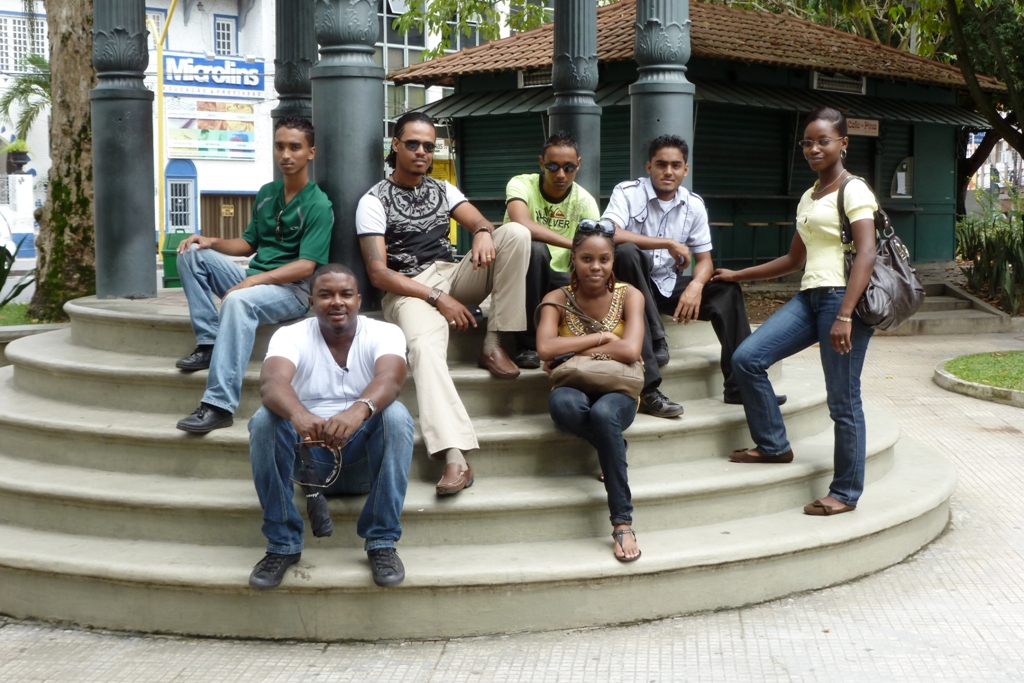
Seven final-year architecture degree students of the University of Guyana, and their lecturer, left Georgetown on a road journey of about 1,452 kilometres (902 miles) that lasted for nearly thirty-four hours. Their destination was Manaus, the capital city of the State of Amazonas in Brazil, our southern neighbour.
The purpose of their visit was to learn, first hand, of the state of conservation of historic buildings in Brazil, using Manaus as a case study.
The group arrived in Manaus around 6:00 hrs Saturday, April 7, on the start of a hectic three-day/two-night study tour.
Students Arifshad Ali, David Bispat, Kiambu Douglas, Noel Henry, Lauren Grant, Shaion Norton, Dhanraj Singh, and Lennox Hernandez senior lecturer, recalled the keen interest with which Brazil protects and presents its historic structures.
Manaus
Manaus, in northern Brazil, was founded in 1669 as the Fort of São José do Rio Negro. The city has a rich and colourful history, one that is reflected in many of the city’s historic buildings and landmarks, and the replicas of several British constructions, such as the floating dock for the port and the surrounding buildings.
Brazil is noted for the protection and presentation of its historic sites; currently the country has ten ‘cultural world heritage sites’ and seven ‘natural world heritage sites’, while another 17 sites are under consideration for ‘World Heritage’ status.
The National Institute of Historic and Artistic Heritage (Instituto do Patrimônio Histórico e Artístico Nacional – IPHAN) is responsible for the preservation of buildings, monuments, structures, objects and sites deemed of historic or cultural importance to the country, and currently holds 1,047 sites.
Students’ experiences
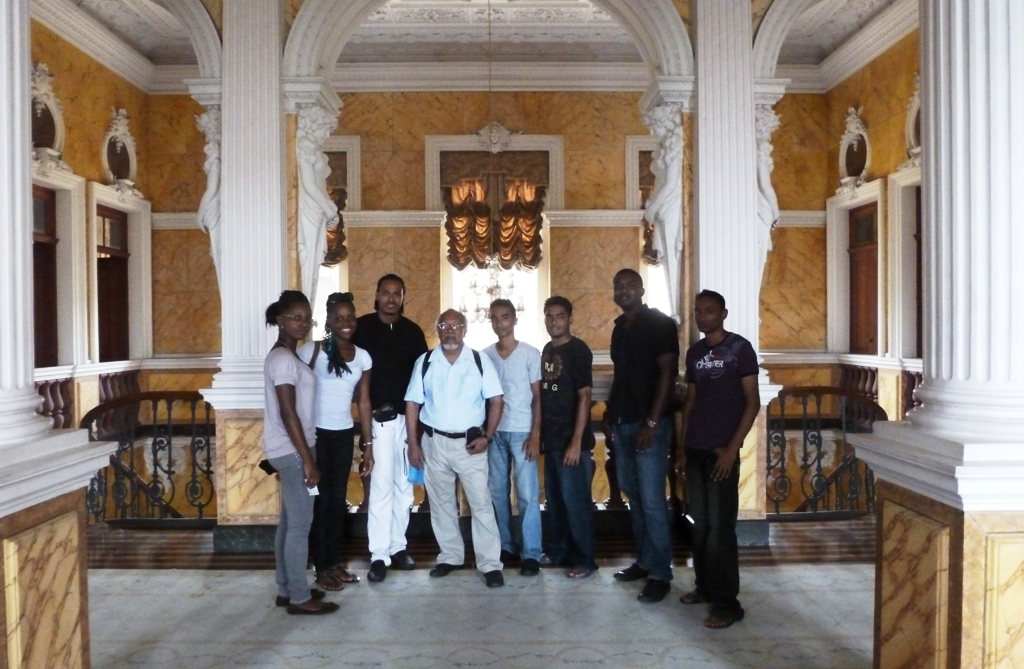
Guyana Times Sunday Magazine interviewed five of the students, who related they had benefitted immensely from the tour, and have plans in mind for revolutionizing historical conservation in Guyana.
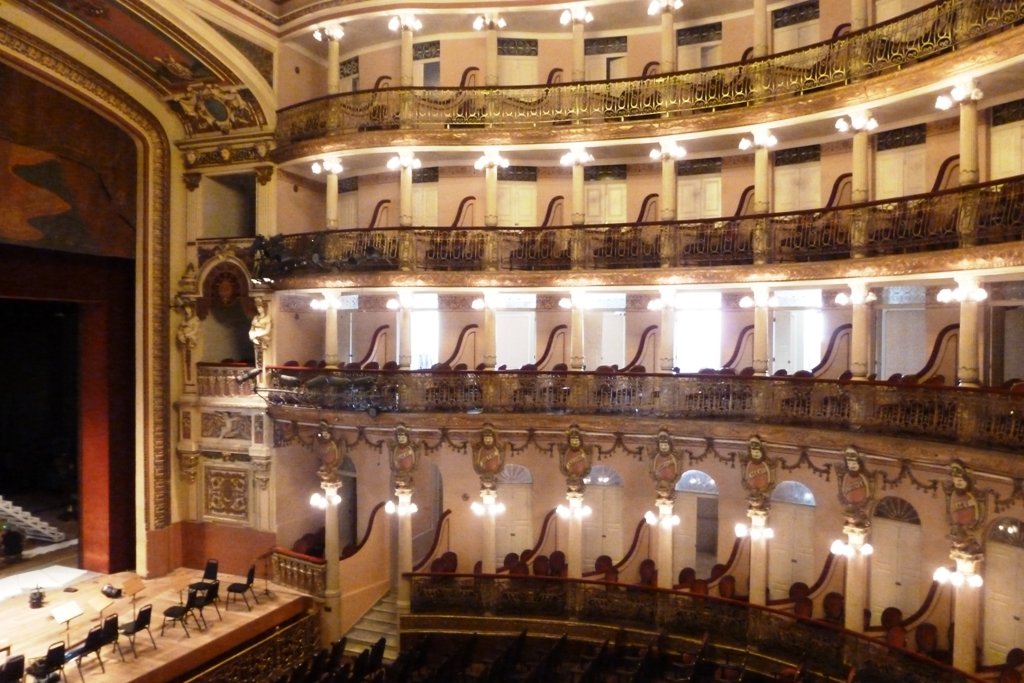
The students toured four historic buildings, including the Provincial Manor House, once the Military Police headquarters, remodelled in 1874 to house several public institutions, and now housing a number of museums, and the Amazonas Opera House, opened in 1896, construction of which began in 1882.
Arifshad Ali said although it was a tiring trip due to long hours of travelling, with little breathing time between the three buses necessary to reach their destination, he was able to gather a lot on conservation of historical buildings. He observed the seriousness by those involved in historical conservation, and was impressed with the innovative ways old buildings were transformed into must-see tourists’ sites.
He pointed out that the buildings are important to a country because they help in the development of the tourism sector in a country.
“Comparing over there and us here, I don’t think we take this matter seriously. We have a few historical buildings, and I don’t think we are doing enough in their conservation. For instance with City Hall, it is in a deplorable state and it happens to be one of Guyana’s long-standing landmarks. Now that I have a background and firsthand experience in historical conservation I’m more adept, when I finish my degree in architecture, to help in this regard. Overall it was an exciting tour.”
Fellow student Noel Henry told Sunday Magazine, “I learnt about the methods used in conserving these historical buildings. What I saw there was passion for conserving those buildings, and we lack that here. I observed also that most of the people involved in historical conservation were driven young people. It shows that youths have an integral role in conserving history. When they talk about conserving history I sense a great passion and this we lack in Guyana. Now with this experience I am able to help in this aspect of conservation.”


Comments are closed.