By Lennox J Hernandez
Sand Creek is an indigenous community (population of 712 in 2009) located in the south of Region 9, about 96 km (60 miles) roughly south-east of Lethem, with the Kanuku Mountains to the north and east, and Sand Creek (after which the village is probably named) to the west, snaking around on the south of the village.
The Rupununi River, into which Sand Creek flows, is further west of the creek. Sand Creek is translated as Katiwau in Wapishana, the language of the people of the area.
Though dating the origins of the village may be difficult, Dorothy Faria a long-time resident of the village, estimates it could be more than125 years old. Villagers are predominately subsistence farmers, and the area has adequate fishing sites.
Picturesque in its savannah setting with a mountainous background and much vegetation, Sand Creek appears serene.
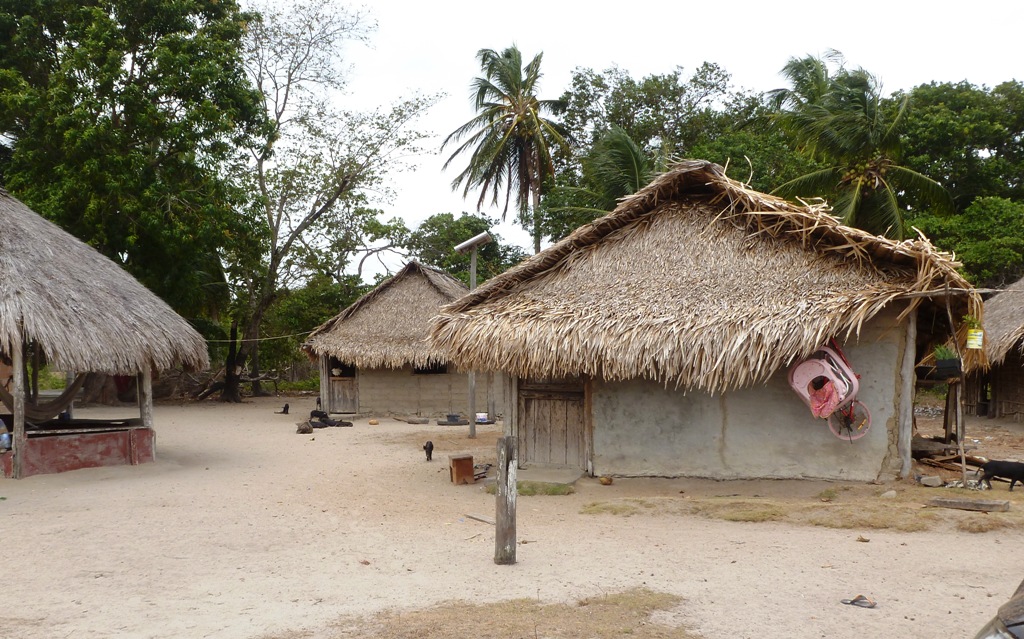
The village today is a mix of old and new; traditional and contemporary, as expressed by the buildings located there.
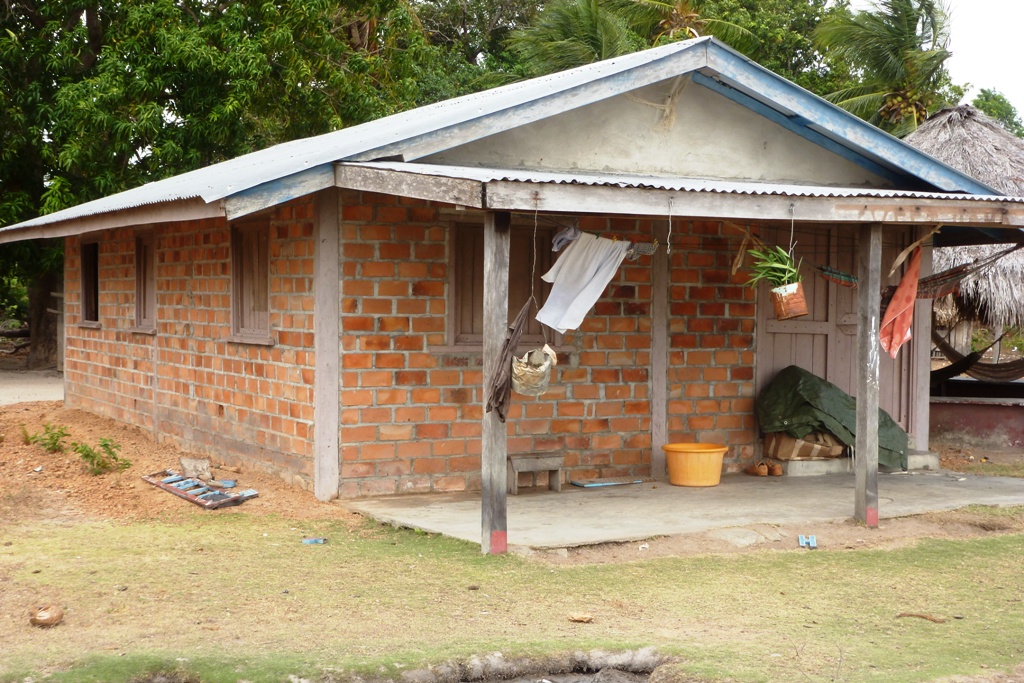
Whereas the village centre has a number of contemporary style buildings, including the Medical Centre, the primary school, the new Catholic Church and the Office of the Village Council, houses outside the centre are of the traditional thatched roof with mud walls, and a few with brick walls and galvanized iron roofs.
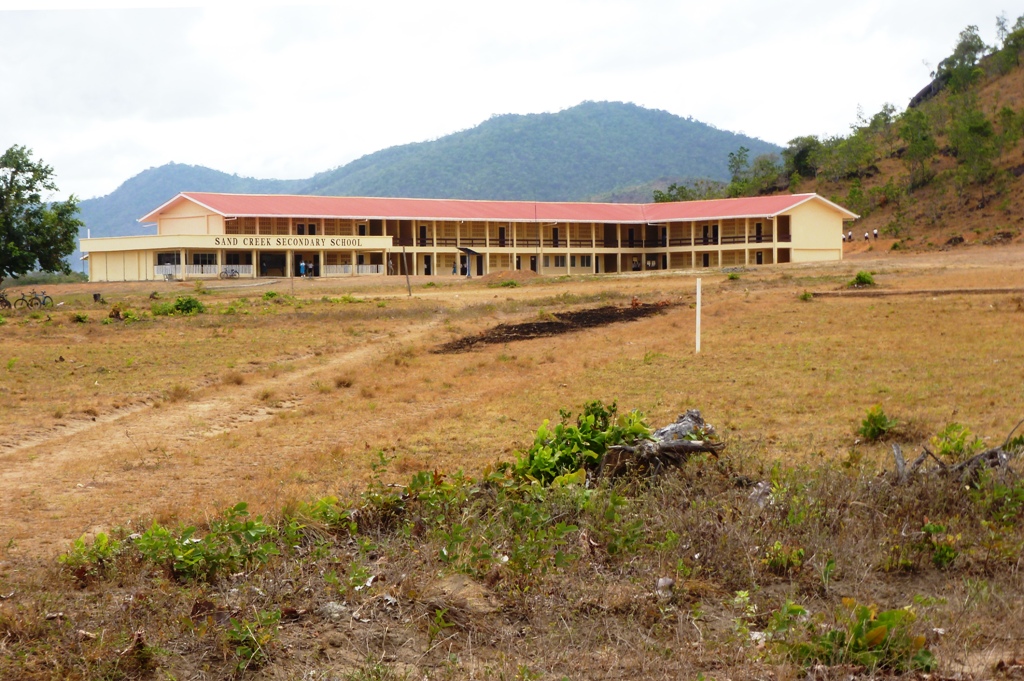
On higher ground, about a 20-minute walkfrom the centre of the village, is the newly built secondary school, which opened in 2012, along with a students’ dormitory and teachers’ quarters, to cater for students from nearby areas.
The age of the village is seen in buildings such as the Storage bond (previously a shop for many decades) and the old Catholic Church, and the huge mango trees, estimated to be more than 100 years old, which line both sides of the main road to the village centre.
A more recent amenity in the village is the solar panel, used for lighting and electrical power.
Early Sand Creek accounts