Anti-Indian Racism 2: Discrimination in the State Sector
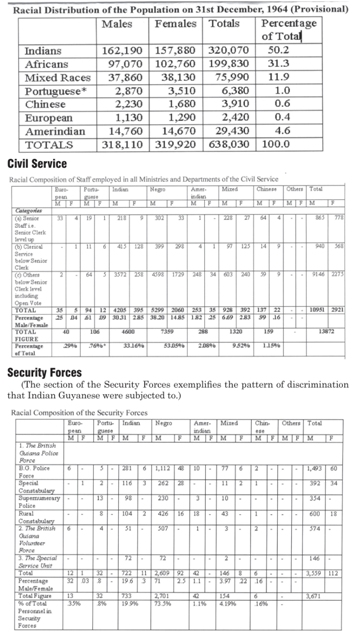
In colonies such as British Guiana, which were established to produce crops and minerals for the metro pole, the arms of the state – especially the civil service – represented the acme of aspirations for the inhabitants who had been dragged from across the continents to provide their labour. The entire system of stratification and status was based on how closely one could imitate the ruling colonials who were white and occupied jobs that automatically conferred status on its holders. The entry of the Indians after the abolition of slavery…

Read More

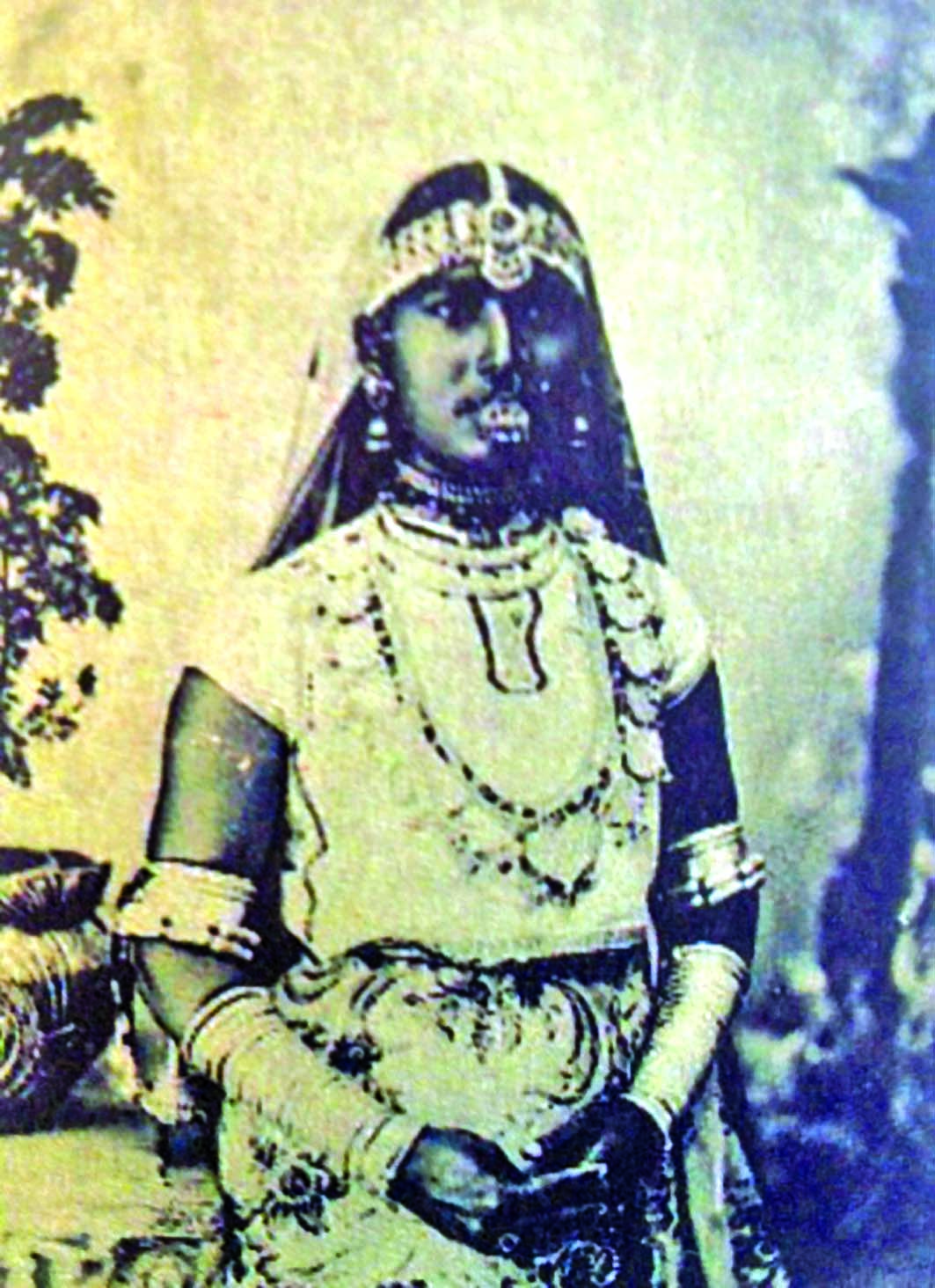
The roots of Anti-Indian Racism Non-Fiction accounts. 1838-1935

From the moment the Indians were brought into then British Guiana on May 5th 1838, they were subjected to racist discrimination and oppression. The racist assumptions that undergirded such actions were in place even before they landed. In fact, they determined their selection to replace the newly freed slaves. The initiator of the scheme to import Indians was John Gladstone, owner of Vreed-en-hoop and several other plantations. He wrote to Gillanders, Arbuthnot & Co. in India about the possibility of supplying him with “Bengalees”; he had heard they were shipping…

Read More

Yupukari holds first turtle festival

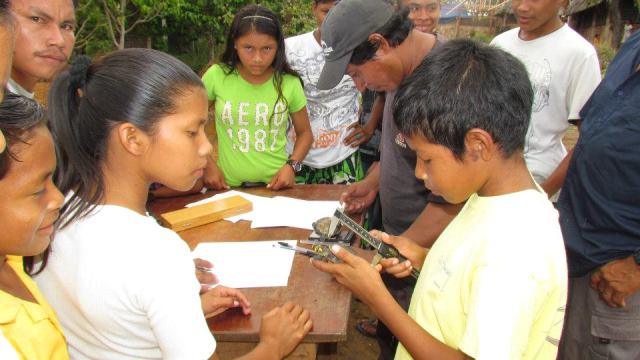
Under the theme ‘Nurturing Community Research to Protect our Environment’, the premiere turtle festival held in Yupukari, Rupununi, saw the release of 57 turtles to their native habitat after a year of “headstarting”- a kind of re-introduction program. At the festival, there were eight educational booths on turtles set up around the village market and in the Rupununi Learners’ Caiman House compound. Wildlife members, adults and other children took turns through the morning to each booth for educational activities, games or craft. In the ‘Crochet Turtles’ booth, participants, using yarn…

Read More

Hard work and a superior product

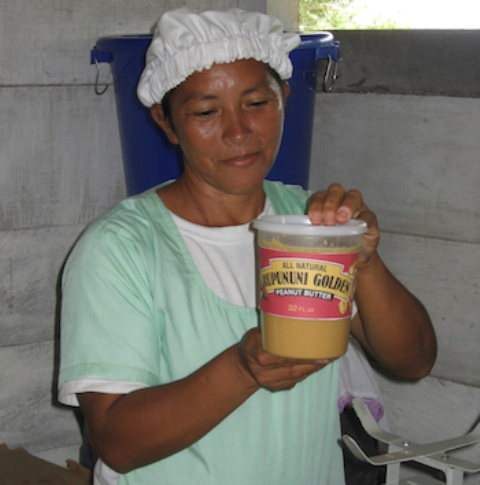
Launched in 2005, the Aranaputa peanut butter factory is a locally-run cooperative, supplying its product to families, schools and lodges across the Rupununi, while providing employment for workers from the surrounding villages. Around 700 acres of Rupununi farmlands are dedicated to peanut cultivation, much of which is channelled to the Aranaputa cooperative. The peanut butter cooperative serves an important role in local economic development by giving farmers a local outlet for their produce, while providing affordable, hygienic, nutritional, locally-produced food to community residents. It was only a few years ago…

Read More

U.S. – based Guyanese designer launches ‘Debonair Designs’

U.S.-based Guyanese designer Monica Caleb inherited a solid fashion foundation from her parents, and now she is determined to leave her mark on the international fashion scene with her metropolitan, debonair collections. The designer’s collections cover the gamut of high fashion, with a focus on elegant couture. Determined to blaze her own trail, Caleb operates her showroom out of her home in Williamsburg, U.S. Although she studied Political Science and attained her BS degree from Stonybrook University, her greatest interest was in clothing design. With much determination, the doyenne of…

Read More

A network of female empowerment

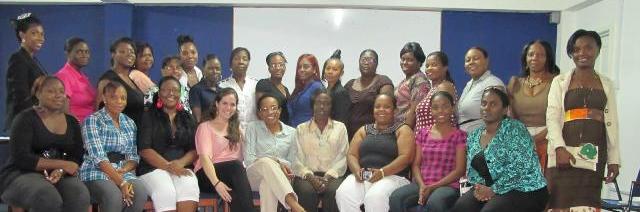
Connecting women countrywide, the Women’s Entrepreneurship Network (WENET) promotes female entrepreneurs and helps in empowering them to be self-sufficient. The project originally started in January 2011 with the financial support from Exxon Mobil and the personal support from a Canadian intern, through the International Youth Internship Program from The Canadian International Development Agency (CIDA). It was originally aimed to equip 50 female entrepreneurs with the knowledge, skills and support to develop sustainable businesses in Region Four.  Through various workshops, networking events, monthly meetings and conferences, recruitment to the project has…

Read More

Transforming communities through literacy

Youth with a Mission Guyana (YWAM) is an international team based in Guyana that is committed to transforming communities nationwide by equipping and training in discipleship and literacy programmes. In 1989, Angelica Rivera from Peru, and four Brazilians, ventured into Guyana to form relationships in their pursuit to begin YWAM Guyana. Soon, volunteers Jackie and Vicki Rozier from the U.S., arrived and took on the challenge to pioneer the work and make the dream a reality. By 1990, YWAM Guyana was born and work began. The team worked alongside local…

Read More

Establishing new frontiers: QAII continues to set standards of excellence with cutting-edge technology

The compliment by the director of the Guyana Learning Channel Dr Seeta Roath to TVG/Channel 28 on the utilisation of its satellite uplink capabilities to convert her vision into reality to take education to the most remote corners of Guyana is instructive for several reasons. First, there is her statement that, when she first broached the idea, she was seen as a “mad woman”. In Guyana, there are those that are so imbued with the notion that Guyana is “third world” that they reflexively conclude that the country can only…

Read More

175 years of the arrival of East Indians in Guyana – they toiled and brought overwhelming success to their adopted homeland

By Shan Razack – Guyanese, will observe May 5th, Indian Immigration Day for the 175th year since East Indians arrived in what was then British Guiana in 1838, bringing with them their ancient customs, food and culture from India. Under a system of agreement, an order in the Council of Britain was passed on July 12, 1838 making provision for indentured immigrants to travel to Guyana for a term of five years. The emigration of Indians was important for the development of the country, as they proved more suitable for…

Read More

‘Serving humanity is like serving God” A Catholic church in Essequibo continues to play a pivotal role in its communities

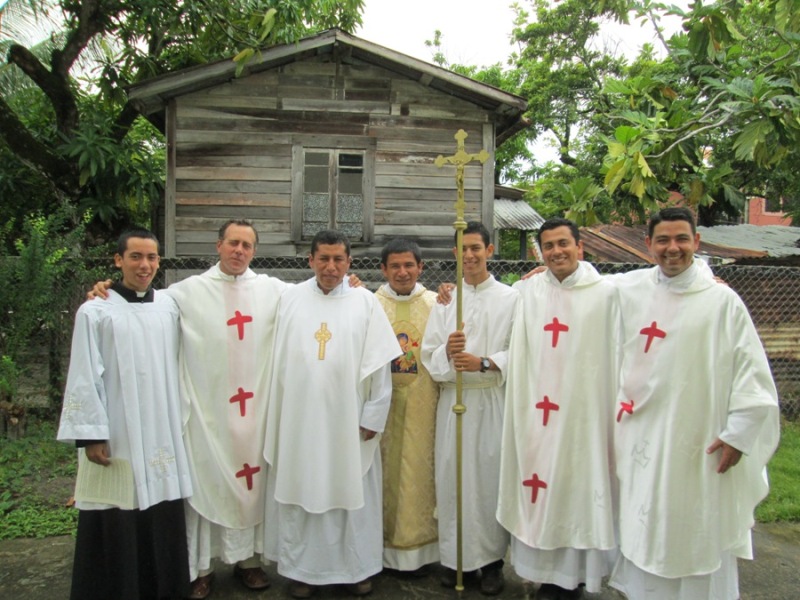
By Indrawattie Natram For centuries, the Catholic Church has been known for its effortless humanitarian services, especially reaching out to the most vulnerable in society. On the Essequibo Coast, the St Francis Xavier Parish Roman Catholic Church in Charity continues to be the “life blood” of the region when it comes to effectively providing its services to the vulnerable communities in the area. St Francis Xavier Parish, which is headed by Pastor Hugo Cardenas, is renowned for meeting communities’ needs by providing one hot meal to some 400 vulnerable students…

Read More