Haste to pay sugar severance linked to workers’ constant struggles
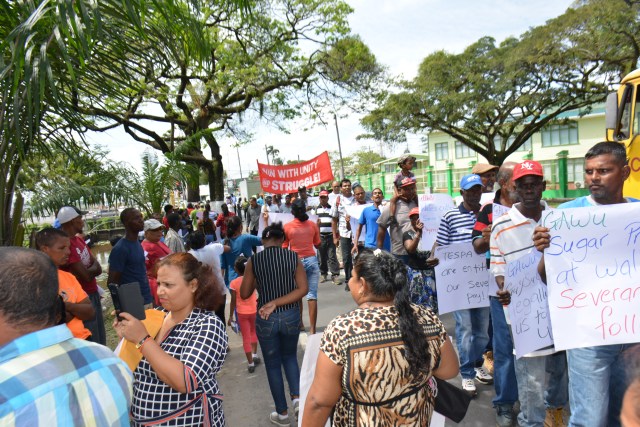
Dear Editor, Several sections of the media have reported about the National Assembly’s unanimous approval of supplementary allocation in the sum of G$2.451B. The now approved allocation will see the state-owned GuySuCo settling outstanding severance payments to thousands of workers who lost their jobs following the Government’s decision to close four (4) sugar estates over the last two (2) years. The approval of the sum came 306 days after Skeldon, Rose Hall, and East Demerara Estates were closed and 671 days after Wales Estate met a similar fate. From the…

Read More

Guyana’s tragedy

The GECOM decision has once again raised political temperatures in Guyana. The Mahabharat is rather unique among Hindu texts in dealing very extensively with the world of politics and, as I wrote a decade ago, I am once again struck by parallels in that ancient conflict and ours in Guyana. The Mahabharata is about the way we humans deceive ourselves, how we are false to others, how we oppress fellow human beings, and how deeply unjust we are to each other in our day-to-day lives. And all the while holding…

Read More

Key legislation lacking in Guyana

…political analyst says as time draws closer to first oil As the time draws closer for first oil, which is expected in the first half of 2020, Government has been making plans to prepare for this new sector, which has the potential to transform the economy, improve infrastructure, and advance the social services in the country. However, much has been said about the Government’s slothfulness in looking towards implementing key pieces of legislation that would guide the sector beyond that critical year. Adding his voice to that argument is former…

Read More

GECOM decision: Darkness at Noon

Darkness at Noon is a 1940 novel by Arthur Koesler about the consolidation of the Soviet dictatorship by Stalin. The title is thought to be an allusion to the unnatural darkness that occurred at midday in the story of Christ’s crucifixion. After months of clear sunshine in Guyana, there were prophetic dark clouds over Georgetown last Thursday when the Appellate Court affirmed President David Granger’s unilateral appointment of the GECOM Chairman, in the absence of the “consensus” with the Opposition Leader, which each of the three Justices conceded, was demanded…

Read More

Guyana’s prison system needs better management

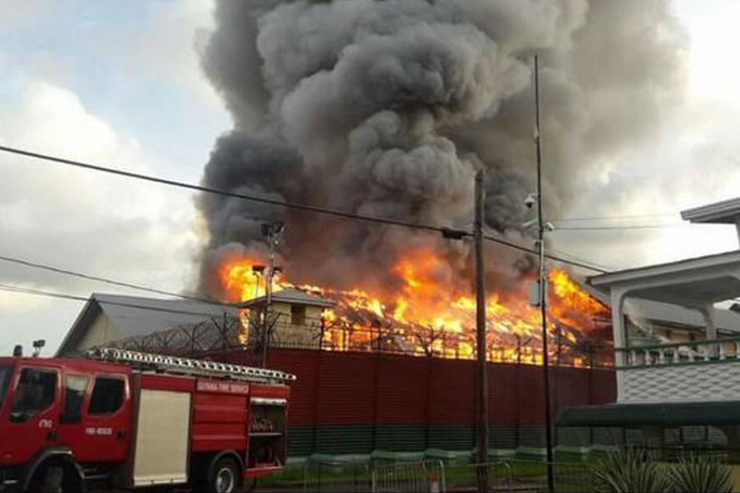
The situation within Guyana’s prison system appears to be getting from bad to worse despite the assurances given by top security and ministerial officials that more will be done to make the country safer and more secure by improving the quality of law enforcement and beefing up the conditions and security of various penitentiaries across the country. On Monday, Guyanese were informed that three more men managed to escape from the Lusignan Prison by scaling a fence there. Officials again assured the public that the men would be caught and…

Read More

Pragmatic multiracial politics

08With the funeral rites about to be read over the AFC at the LGE, there are once again calls for a “multiracial” party. Now, what is a “multi-racial” party? Is it one in which the leaders are drawn from all or most of the various racial/ethnic blocs that constitute our polity? Is it one that has members drawn from all the various groups? Do the proportions have to roughly mirror the population, or will any assorted agglomeration (like APNU/AFC) do? Or does it mean that the interests of all the…

Read More

Culture and alcohol

The number one producer of alcoholic beverages in Guyana, Demerara Distillers Limited (DDL), recently launched a “drink responsibly” campaign. This is quite commendable in view of the tremendous damage wreaked in our society by alcohol abuse. While alcoholism exists in all communities, like that other social pathology, suicide, it is particularly prevalent among Indian Guyanese, with both arising from their indentureship experience. That origin also helped shape their reaction to alcohol consumption, which – a fact not widely known – is always socially constructed. This should be taken into consideration…

Read More

Working towards credible elections

The spate of reforms that begun in the early 1990s were intended to drastically transform the manner in which elections are administered in Guyana at the local, regional and national levels. Those reforms were also specifically designed to ensure that Guyanese could have confidence that their will was being protected and reflected in the outcome of elections which should at all times be transparent, free and fair. This is exactly the reason behind a decision to put enough measures in place to ensure that the Guyana Elections Commission (GECOM) is…

Read More

Myth in African-Indian relations

Last week, the Kaieteur News essayed an editorial, “Local Government Elections and racial voting”, wherein it sought to discuss the “racial voting” that characterised Guyanese politics. The Editorial claimed, “The animosity between Indo- and Afro-Guyanese is historical; it can be traced back to the freed blacks becoming suspicious of the arrival of indentured East Indian servants from India, whom they feared would have compromised their bargaining rights with the planter class in British Guiana.” Now, there is no question that the planters introduced indentured labour because they wanted cheap labour.…

Read More

Guarding against electoral fraud

Elections are one of the crucial institutions to ensure the existence – not to mention the functioning — of democracy. Guyanese know this (or should know this) to their cost, since our country was actually birthed through electoral “fiddling” by the British when independence was in sight. The winner of the 1961 elections was supposed to lead an independent Guyana, but when the PPP fulfilled that condi-tion, with pressure from the then US administration of JF Kennedy, the British changed the electoral system to ensure a coalition between the PNC…

Read More